03Sep'25
National Open and Distance University Hosts Ibero-American Dialogue on Peace Education and Social Inclusion
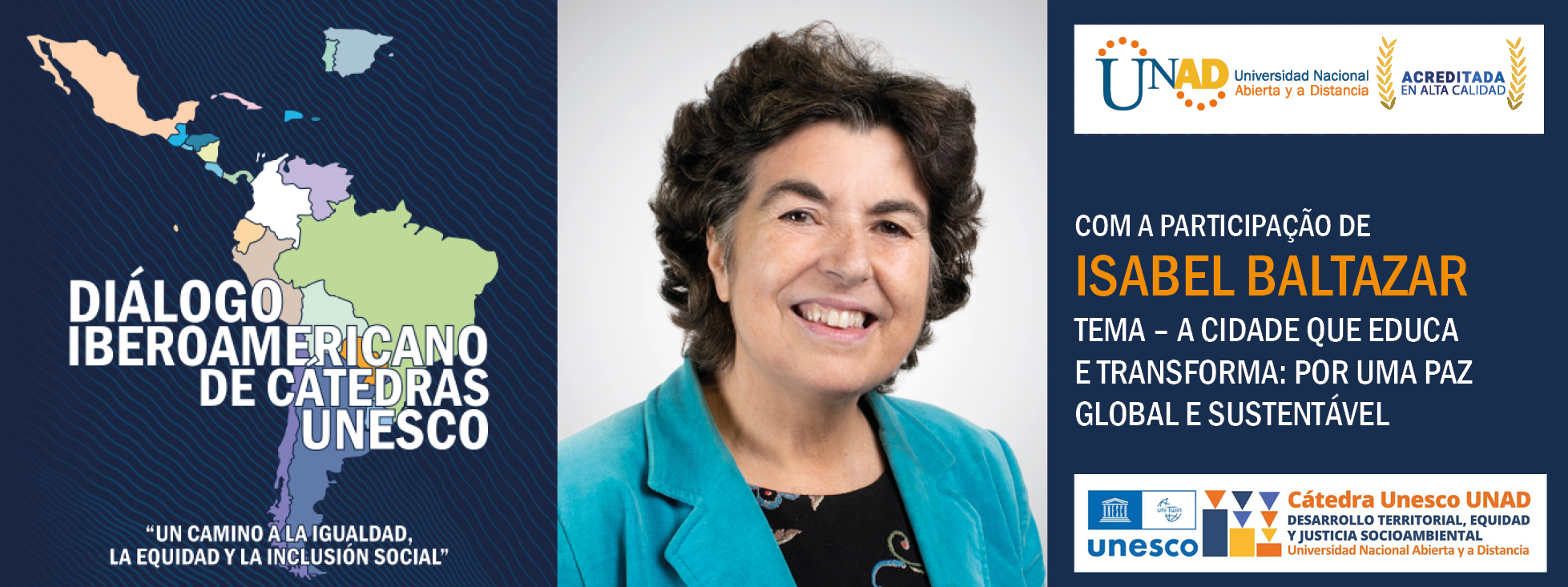
On September 3, 2025, the National Open and Distance University (UNAD) in Bogotá hosted the Ibero-American Dialogue of UNESCO Chairs, themed “A Path Toward Equality, Equity, and Social Inclusion.” Among the speakers was Professor Isabel Baltazar, PhD, scientific coordinator of the “The City that Educates and Transforms” Chair, led by ISEC Lisboa, who shared reflections on the role of education in building global and sustainable peace.
During her speech, Professor Isabel Baltazar emphasized that peace education cannot be isolated from the global context in which we live: local conflicts have planetary repercussions, and the planet’s sustainability depends on conscious and active citizenship. “Educating for peace is an ethical imperative of the 2030 Agenda. It is education for everyone, at all ages, and schools remain a fundamental pillar in this process,” the professor stated.
The Chair she coordinates has been promoting innovative projects that unite creativity, citizenship, and social transformation. One example is the “Creative Reflections on the City that Educates and Transforms” competition, open to students, teachers, and non-teaching staff, which encourages expression through photography, multimedia, texts, drawings, or artistic installations—always with the goal of envisioning more inclusive and educational cities.
Another highlight is the JUNTOS magazine, aimed at secondary schools in Portugal and the European Union, which invites students to reflect on democracy, interculturality, and inclusion. Among the participants, Liceu Camões created its own website to share projects, research, and content on citizenship, European heritage, and local culture, strengthening the link between school, community, and city.
These initiatives demonstrate how education can be a driver of social and environmental transformation, capable of forming conscious, critical citizens prepared to face the challenges of an interdependent world.
The summary of the communication is available HERE.