18Feb'26
The city also educates”: UNESCO Chair in the spotlight on an international platform
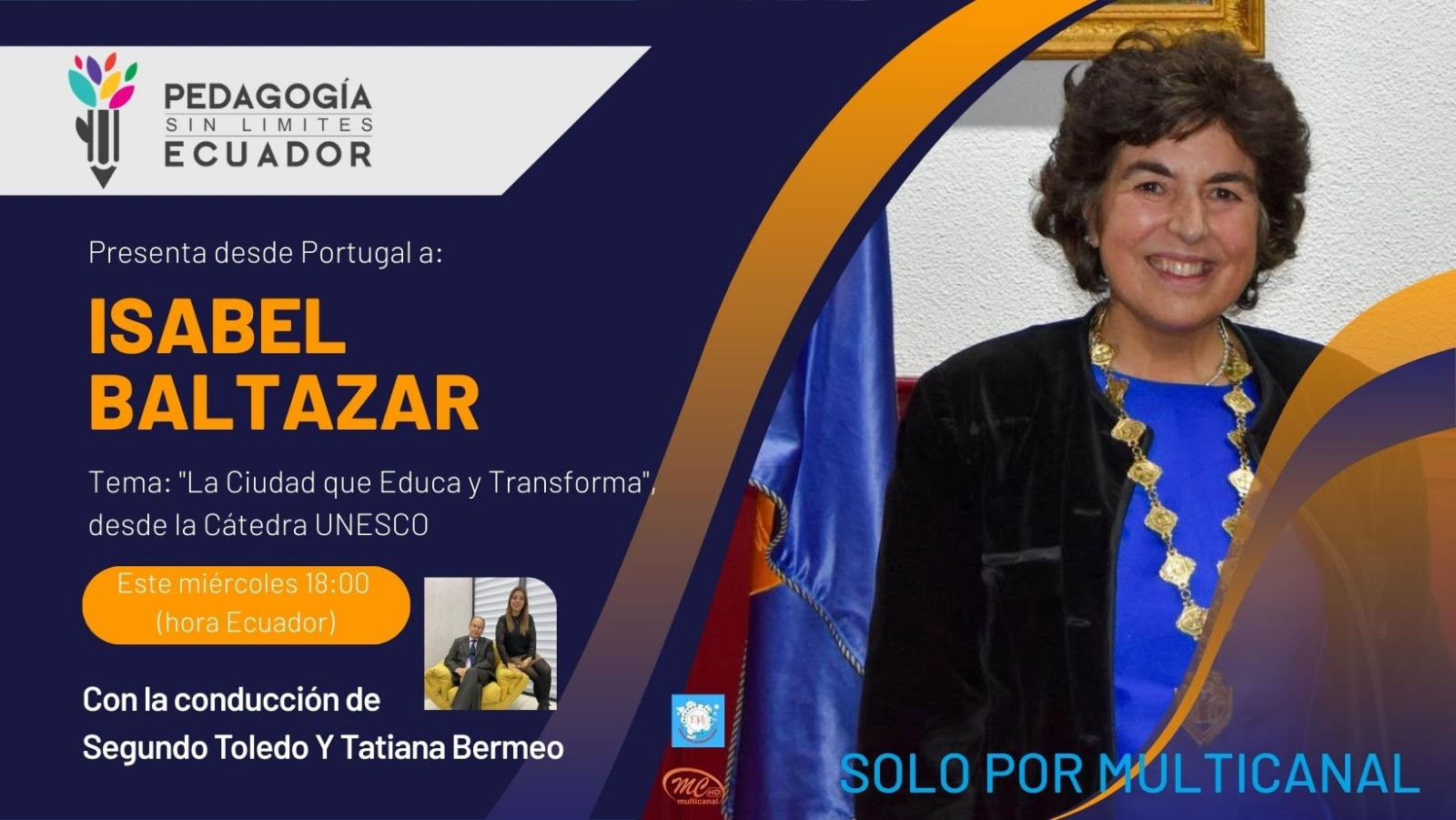
The coordinator of the UNESCO Chair “The City that Educates and Transforms”, Isabel Baltazar, was recently invited for an interview on the platform Pedagogía Sin Límites Ecuador, a space for interdisciplinary reflection dedicated to the critical analysis of educational practices in Latin American and global contexts.
The interview, now available to the public, was part of a programme structured in several segments, addressing key issues surrounding the concept of “the city that educates and transforms”. Throughout the conversation, Isabel Baltazar highlighted the importance of understanding the city as a broader educational ecosystem, where not only schools and universities, but also public spaces — such as streets, squares and museums — play an active role in learning and the development of citizenship.
The participation of the Chair’s coordinator provided an opportunity to explore in greater depth the role of public policies and local governments in promoting ‘educating cities’, emphasising the need to involve citizens in the co-creation of solutions to urban and social challenges. Concrete examples and international best practices were also discussed, highlighting the potential of this model to promote social inclusion and reduce inequalities.
The mission of the Pedagogía Sin Límites Ecuador platform is to foster critical and interdisciplinary thinking, challenging dominant pedagogical models and encouraging the development of context-specific educational proposals. In this regard, Isabel Baltazar’s presence strengthens dialogue between different contexts and contributes to the sharing of relevant experiences within the Ibero-American region.
During the interview, the relationship between ‘educating cities’ and the Sustainable Development Goals promoted by UNESCO and the UN was also explored, highlighting the contribution of this approach to sustainable and inclusive development.
The interview concluded with a message addressed to the educational community and the general public, calling for everyone’s active participation in building fairer, more educational and transformative cities.
The full interview was broadcast on 18 February and is available online, representing an important contribution to the current debate on education, local communities and citizenship.
Watch the full interview HERE.